Infection prevention staff training is one of the most important components of safe and compliant healthcare or care service operations. Whether in a care home, dental practice, private clinic, or community healthcare setting, the quality of training directly affects patient safety, regulatory compliance, and overall operational standards. Yet, many organisations treat infection control training as a basic onboarding requirement rather than an ongoing, structured system that shapes daily behaviour.
Effective training is not just about ticking compliance boxes. It is about ensuring that every member of staff understands how infections spread, how risks are controlled in real environments, and how their actions directly affect the safety of vulnerable individuals. When training is done properly, it becomes part of workplace culture rather than a one-time obligation.
Why Infection Prevention Training Matters in Real Healthcare Environments
Infection prevention is not theoretical. It is a practical, day-to-day requirement in any environment where people receive care or where clinical or hygiene-sensitive work is performed. Infections can spread quickly through poor hand hygiene, incorrect use of protective equipment, or contaminated surfaces. Even small lapses can lead to serious consequences, especially for elderly or immunocompromised individuals.
From a regulatory perspective, organisations in the UK are expected to demonstrate strong infection control systems. Bodies such as the Care Quality Commission (CQC) assess not only policies but also staff behaviour and consistency. This means training must go beyond documentation and focus on real-world application.
Good infection prevention training reduces outbreaks, improves inspection outcomes, and builds trust with patients and service users. It also reduces operational disruption caused by avoidable infection incidents.
Understanding How Infections Spread in Workplace Settings
A strong infection prevention training programme always begins with understanding transmission. Staff need a clear and practical explanation of how infections actually spread in real environments rather than just textbook definitions.
Infections can spread through direct physical contact, such as touching a patient or contaminated surface. They can also spread indirectly through shared equipment, door handles, bed rails, or medical instruments. Respiratory droplets are another major transmission route, particularly in close-contact environments. In some cases, airborne particles can also contribute to the spread of certain infections.
When staff understand these mechanisms, they begin to recognise risks in everyday tasks. For example, something as simple as using a shared pen or touching a mobile device during patient care can become a transmission route if proper hygiene is not followed.
This foundational understanding helps shift behaviour from routine task completion to risk-aware decision making.
Hand Hygiene: The Most Critical Line of Defence
Hand hygiene remains the single most effective method of preventing infection spread, yet it is also one of the most commonly overlooked areas in practice. Effective training must go far beyond telling staff to “wash hands regularly.”
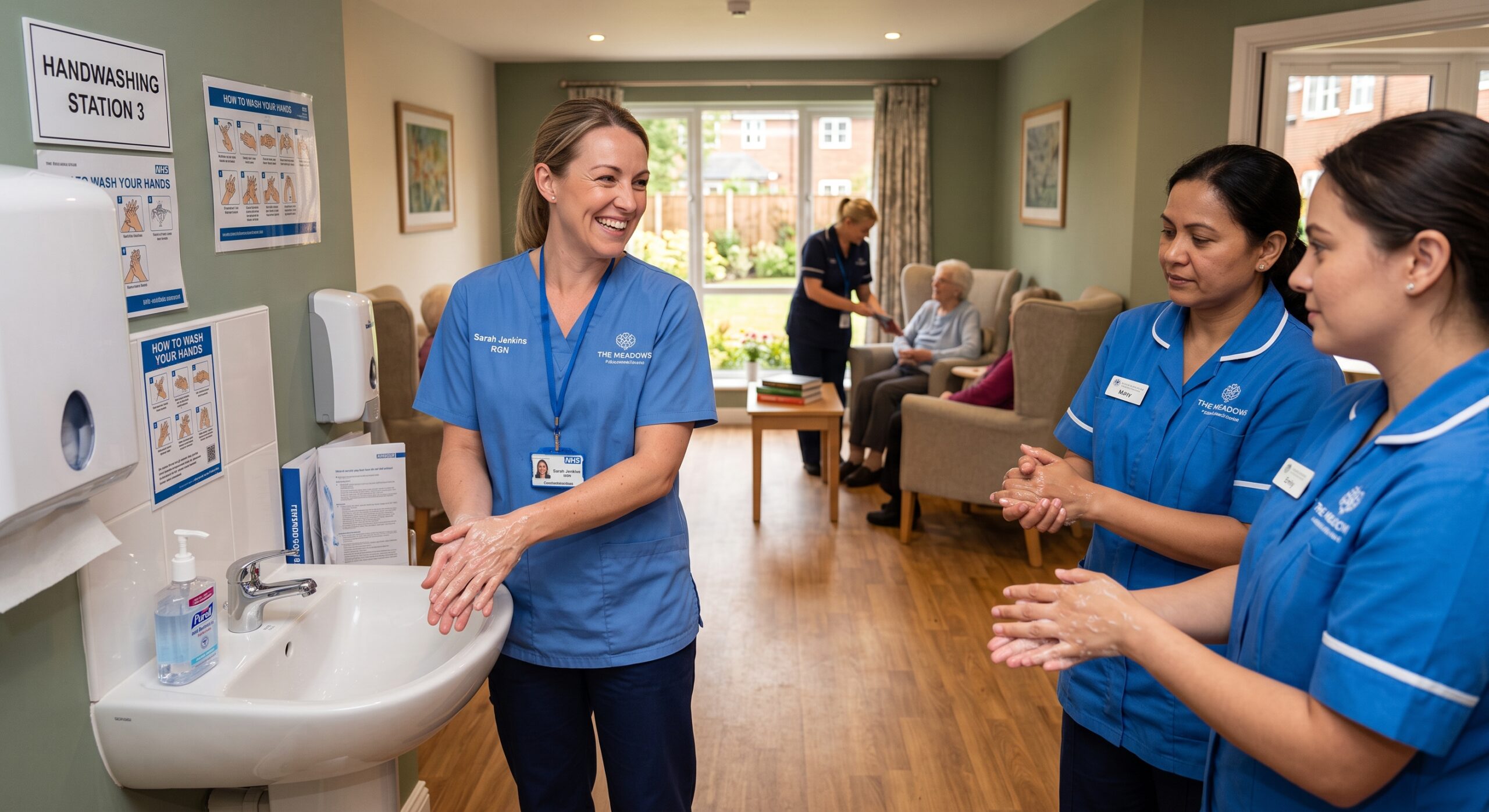
Staff should be trained on exactly when hand hygiene is required, including before and after patient contact, after touching potentially contaminated surfaces, before clean or aseptic procedures, and after removing gloves. These moments are critical because they represent transition points where contamination is most likely to spread.
Training should also focus on technique. Proper handwashing involves more than a quick rinse. It requires thorough cleaning of all areas of the hands for an adequate duration, ensuring that no surfaces are missed. Alcohol-based hand rub is useful in many situations, but staff must also understand when soap and water are necessary, particularly when dealing with visible contamination or certain types of pathogens.
When staff develop strong hand hygiene habits, infection risk is significantly reduced across the entire organisation.
Personal Protective Equipment (PPE) and Safe Usage Practices
Personal protective equipment plays a key role in breaking the chain of infection, but its effectiveness depends entirely on correct usage. Many infection risks occur not because PPE is unavailable, but because it is used incorrectly.
Training should cover the purpose of different types of PPE, including gloves, aprons, masks, face shields, and gowns. Staff need to understand which equipment is appropriate for different levels of risk and procedures.
Equally important is the correct method of putting on and removing PPE. Improper removal can lead to contamination even if the PPE itself was used correctly during a procedure. For example, touching the outside of gloves or masks during removal can transfer pathogens directly to the hands or face.
Practical demonstrations and supervised practice should be part of training rather than relying on written instructions alone. Staff should feel confident performing these steps under real conditions.
Environmental Cleaning and High-Touch Surface Control
Environmental hygiene is another essential component of infection prevention. Many infection outbreaks are linked to contaminated surfaces rather than direct patient contact.
Training should explain how cleaning responsibilities are structured within the workplace and what standards are expected for different areas. High-risk and high-touch surfaces such as bed rails, door handles, light switches, medical equipment, and shared devices require more frequent cleaning and careful attention.
Staff should also be trained on cleaning products and disinfectants, including how they work, correct dilution (if applicable), and required contact time to be effective. Using cleaning products incorrectly can significantly reduce their ability to kill pathogens.
A well-trained workforce understands that cleaning is not just about appearance but about reducing microbial load and breaking transmission chains.
Safe Handling and Disposal of Clinical Waste
Improper waste handling is a common but preventable source of infection risk. Training must clearly explain how different types of waste should be identified, separated, and disposed of safely.
Clinical waste, general waste, and hazardous materials should never be mixed. Staff must understand colour-coded waste systems and the importance of correct segregation at the point of disposal. Sharps safety is particularly important, including proper use of sharps containers and never recapping needles.
Spill management procedures should also be included so staff know how to respond quickly and safely when contamination occurs. This reduces both infection risk and environmental contamination.
Outbreak Identification and Response Procedures
Even with strong prevention systems, outbreaks can still occur. This makes early identification and response training essential.
Staff should be able to recognise early signs of potential infection outbreaks, such as clusters of symptoms, unusual illness patterns, or increased absenteeism among patients or residents. Once identified, there must be clear reporting procedures in place.
Training should clearly outline escalation pathways, isolation procedures, communication responsibilities, and documentation requirements. Quick action can significantly reduce the spread and severity of an outbreak.
In many regulated environments, failure to respond correctly to early warning signs is considered a major compliance failure.
Building a Culture of Accountability and Continuous Improvement
Infection prevention should not be treated as a one-time training session. It must become part of the ongoing culture of the organisation.
This includes regular refresher training, competency assessments, supervision, and feedback mechanisms. Staff should be encouraged to raise concerns without fear and to report unsafe practices when they occur.
Leadership plays a critical role in reinforcing expectations. When managers consistently model correct infection prevention behaviours, staff are more likely to follow them.
A strong culture of accountability ensures that infection prevention remains active and visible rather than becoming a forgotten policy document.
Conclusion: Turning Training into Everyday Practice
Effective infection prevention training is not about memorising rules. It is about building consistent habits that reduce risk and protect vulnerable individuals. When staff understand how infections spread, how to apply hygiene principles correctly, and how to respond in real situations, the entire organisation becomes safer and more efficient.
The most successful healthcare and care environments are those where infection prevention is embedded into daily routines rather than treated as an occasional requirement. In these environments, training becomes more than education. It becomes protection.